Trauma scene cleaning: what to expect and who to call
Updated: Oct 8
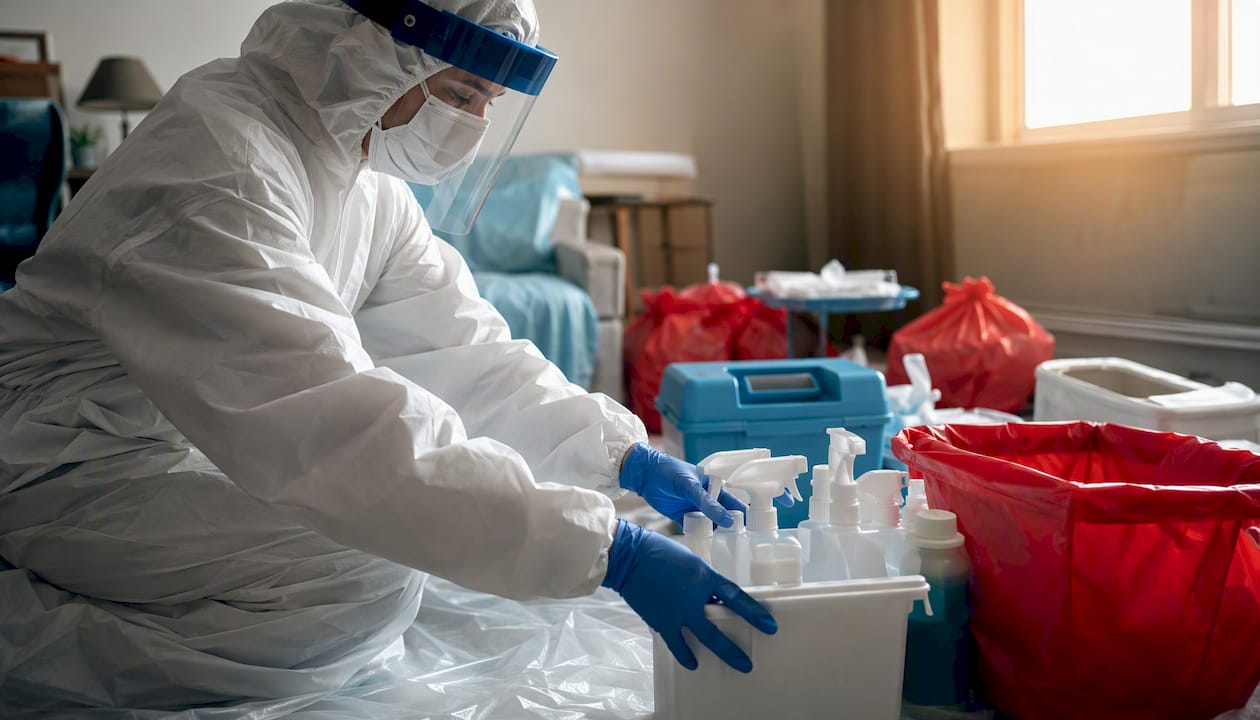
Trauma scene cleaning is the professional cleaning, disinfection, decontamination, and safe removal of blood, bodily fluids, and other potentially infectious materials following a traumatic incident. Also referred to as crime scene cleanup, biohazard remediation, or forensic cleanup, it covers situations ranging from unattended deaths to serious injuries. If there is any ongoing danger, call 999 first. Once the scene has been released by police or emergency services, contact a certified trauma cleaner straight away. Have the address, type of incident, and access details ready before you call.
While you wait, please observe these three safety rules:
Do not touch blood, bodily fluids, or any contaminated surface with bare hands.
Keep family members, colleagues, and other occupants away from the affected area.
Do not attempt deep cleaning, waste disposal, or removal of contaminated items yourself.
Key takeaways
Trauma scene cleaning requires a certified specialist: the health risks, waste regulations, and documentation requirements make DIY cleanup both dangerous and legally problematic.
Point | Details |
Call a professional immediately | Contact a certified trauma cleaner once the scene is released; have the address, incident type, and access details ready. |
Expect full PPE and waste documentation | Legitimate providers use hospital-grade PPE, segregate waste into approved containers, and supply consignment notes after every job. |
Ask for written evidence | Request a certificate of decontamination, waste consignment notes, and an insurance certificate before committing to any provider. |
Budget for severity and restoration | Price reflects scene size, contamination depth, porous material removal, and odour treatment; distrust all-in fixed quotes given without a site visit. |
Dudleyspecialistcleaners covers the West Midlands | Serving Dudley, Wolverhampton, and Walsall with hospital-grade disinfection, licensed waste handling, and 24/7 emergency response. |
Table of Contents
What does trauma scene cleaning cover, and when do you need it?
Most people assume a mop and disinfectant spray will do the job. They will not. Trauma scene cleaning, known in the industry as biohazard remediation or forensic cleanup, is a specialist discipline that goes far beyond ordinary cleaning. The health risks from blood and bodily fluids are real: pathogens including hepatitis B, hepatitis C, and HIV can survive on surfaces for hours or days, and improper handling creates legal liability as well as physical danger.
Situations that require a specialist
Suicide or suspected suicide
Homicide or serious assault
Unattended death (where a body has remained undiscovered for some time)
Decomposition and associated odour contamination
Major blood spill following a serious injury
Sharps or needle contamination
Any incident where bodily fluids have penetrated porous surfaces
What the service includes and what it does not
A professional team handles decontamination, sharps removal, odour control, waste packaging and transport to a licensed disposal facility, and basic restoration where structurally possible. What it does not include is forensic investigation: trauma cleaners work after law enforcement has completed its work and released the scene.
Incident type | Why a specialist is needed |
Unattended death | Decomposition fluids penetrate flooring and subfloor; standard cleaning cannot remove pathogens or odour |
Homicide or serious assault | Large blood volumes, potential sharps, and legal waste classification requirements |
Suicide | Biohazard blood cleanup across multiple surfaces, often including porous materials; emotional sensitivity required |
Major injury or medical emergency | Blood-borne pathogen risk; waste must be classified and disposed of through authorised routes |
What services should you expect from trained trauma scene cleaners?
A credible biohazard removal service does not simply wipe surfaces and leave. The scope of work is methodical, and every stage has a purpose.
Full service checklist
Written risk assessment before work begins
Containment of the affected area to prevent cross-contamination
Full PPE donning by all technicians, including gloves, coveralls, respiratory protection, and eye protection
Gross contamination removal (blood, fluids, tissue)
Disinfection using hospital-grade biocides at appropriate contact times
Sharps identification, safe removal, and packaging in approved sharps containers
Waste segregation into correct containers (orange bags or orange-lidded rigid yellow containers for infectious waste, per Gov)
Licensed transport and disposal with consignment documentation
Odour control treatment, including specialist products for decomposition odours
Restoration or repair where structurally feasible
Written certificate of decontamination and job report on handover
Hospital-grade biocides are used at concentrations and contact times validated for bloodborne pathogens. Visual inspection and, where appropriate, verification testing confirm that decontamination has been achieved before the team leaves. The ANSI/IICRC S540 standard provides consensus-based criteria for inspection and confirmation of cleaning that reputable UK providers reference when designing their procedures.
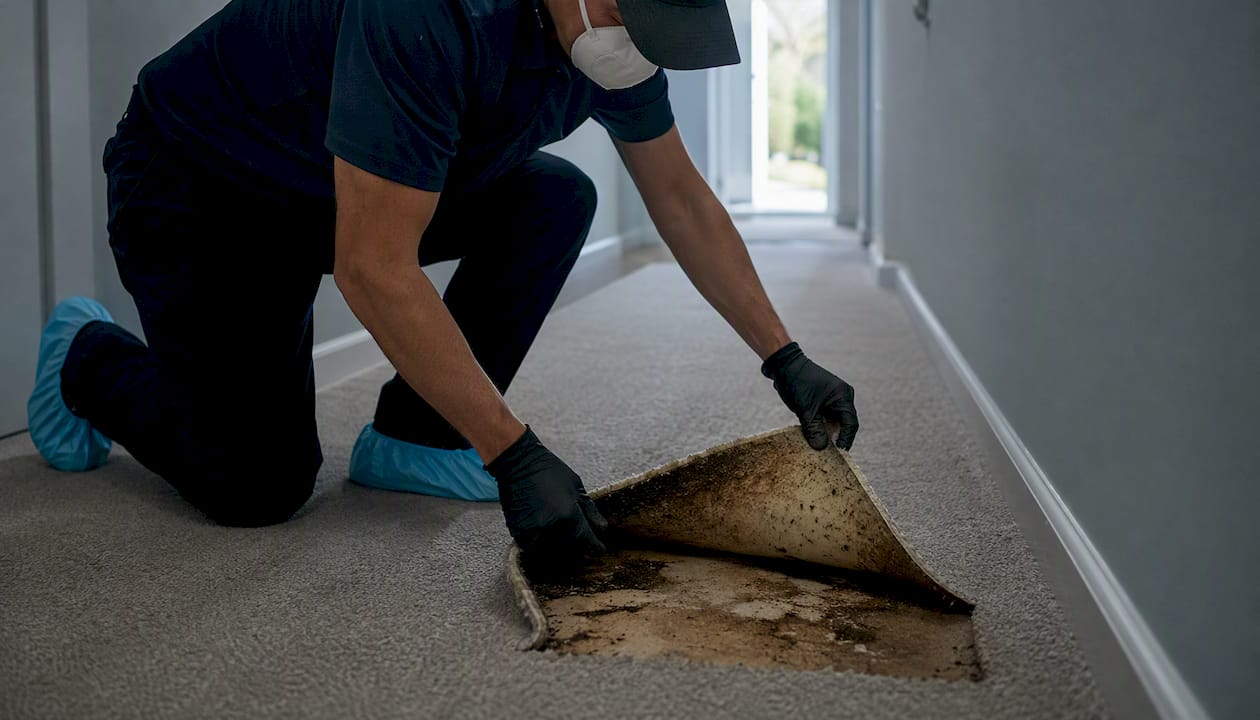
Pro Tip: Porous materials such as carpets, underlay, mattresses, and soft furnishings are particularly difficult to decontaminate. HSE guidance on blood and body fluid spills notes that porous materials can trap contamination and be damaged by disinfectants. In practice, removal and replacement is often safer and more cost-effective than attempting deep chemical treatment. A professional team will assess each item individually and advise you honestly rather than applying a blanket approach.
What happens on site, step by step?
Understanding the process helps you prepare practically and emotionally. Here is what a professional after trauma cleaning job looks like from arrival to handover.
The step sequence
Scene release and briefing. The team confirms the scene has been released by police or the coroner, then receives a briefing on the incident type and any access restrictions.
Inspection and risk assessment. Technicians assess the extent of contamination, identify porous materials, note structural access issues, and document findings.
Containment. The affected area is isolated using physical barriers and negative-pressure measures where required, preventing contamination from spreading.
PPE donning. All technicians put on full protective equipment in a designated donning zone before entering the contaminated area.
Gross contamination removal. Visible blood, fluids, and contaminated materials are removed and packaged as clinical waste.
Disinfection. Hospital-grade biocides are applied to all affected surfaces at validated concentrations and contact times.
Specialist treatments. Porous items are assessed; some are removed for disposal, others treated with steam or specialist chemical processes. Odour control products are applied.
PPE doffing and waste clearance. Contaminated PPE is removed in a controlled sequence before technicians leave the work area, kept separate from clean equipment, and disposed of as clinical waste.
Documentation and handover. A written certificate of decontamination and waste consignment notes are provided to the client.
Typical job durations
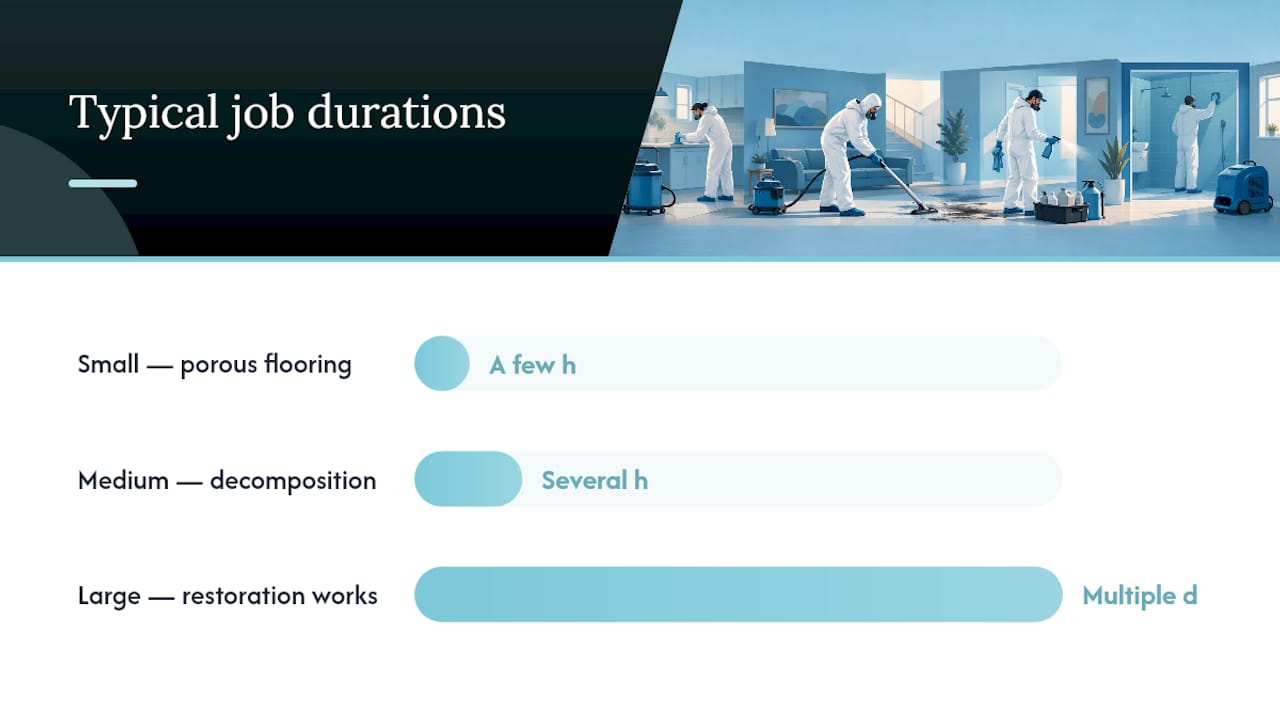
Job size | Typical duration | Common factors that extend time |
Small (single room, limited contamination) | A few hours | Porous flooring, restricted access |
Medium (multiple rooms or significant blood volume) | Several hours | Decomposition, structural penetration |
Large (whole property, decomposition, or restoration required) | Multiple days | Subfloor damage, odour remediation, restoration works |
Before the team arrives, clear access to the property, secure pets, and let the provider know about any relevant access codes, parking restrictions, or utility shut-off points.
What UK health, safety, and waste rules apply?
Trauma scene cleaning in the UK operates within a clear legal and regulatory framework. Understanding it helps you verify that a provider is genuinely compliant rather than simply claiming to be.
PPE requirements under HSE guidance. The HSE’s guidance on PPE for bloodborne viruses sets out that PPE should be selected when other controls do not adequately reduce exposure. Critically, contaminated PPE must be removed before leaving the workplace and stored separately from uncontaminated equipment. Glove use does not replace hand washing.
Hierarchy of controls. PPE is the last resort in the hierarchy of controls, not the first line of defence. Credible providers demonstrate engineering controls (containment, restricted access, ventilation) and safe working practices as part of their job plan. A team that relies on PPE alone, without documented containment procedures, is not meeting the standard.
Healthcare waste classification and packaging. Blood and bodily fluids are classified as infectious healthcare waste. Under Gov and Healthcare Technical Memorandum 07-01, this waste must be segregated into orange bags or orange-lidded rigid yellow containers and transported by a licensed waste carrier to an authorised disposal facility.
Waste consignment documentation. Licensed waste carriers must provide consignment notes for each load of clinical waste. Ask for these after every job: they are your proof that waste was handled legally.
Decontamination procedures. HSE guidance on chemical disinfection of blood and body fluid spillages requires that spills are made safe quickly, that appropriate protective clothing is worn, that freshly prepared disinfectant is used, and that contaminated materials are disposed of as clinical waste.
A provider who cannot explain their waste disposal route, name their licensed carrier, or produce consignment notes after the job is not operating within the legal framework. This is a compliance failure, not a minor administrative gap.
How much does trauma scene cleaning cost in the UK?
There is no single fixed price for biohazard removal services, and any company quoting a flat fee over the phone without seeing the scene should be treated with caution. Pricing reflects genuine variables.
The main cost drivers are:
Scene size. A single room costs significantly less than a multi-room property.
Severity. High blood volumes, decomposition, or contamination that has penetrated subfloor structures require more time, more materials, and more specialist treatment.
Access and location. Restricted access, upper-floor flats, or remote locations add time and logistics costs.
Time of day. Emergency callouts outside standard hours carry a premium, as they should: you need a team available at 2 AM, and that availability has a cost.
Waste disposal. Licensed transport and disposal of clinical waste is a regulated, documented process. It is never free, and a quote that does not mention it is almost certainly excluding it.
Restoration. If flooring, plasterboard, or fixtures require removal and replacement, this adds both materials and labour.
Odour treatment. Decomposition odours require specialist products and sometimes multiple treatments.
Red flags in a quotation:
No mention of how waste will be disposed of or who the licensed carrier is
No insurance certificate or liability cover offered
No written job report or certificate of decontamination included
A very low all-in fixed price for a complex job described over the phone
Always ask for a written quote that itemises waste disposal, restoration scope, and what documentation you will receive. A ballpark figure given without a site visit is not a reliable basis for comparison.
How do you choose a trauma scene cleaning company?
The right provider combines technical compliance, genuine experience, and the discretion that sensitive situations demand. Here is what to ask and what to look for.
Questions to ask on first contact
What is your public liability insurance limit, and can you provide a certificate?
Who is your licensed waste carrier, and will I receive consignment notes after the job?
What infection control procedures do you follow, and are they documented?
How quickly can you attend, and do you offer 24/7 emergency response?
What training and certification do your technicians hold?
Can you provide a written certificate of decontamination on completion?
Do you have references from NHS, local authority, or commercial clients?
Red flags to watch for
Refusal to provide written documentation of any kind
Vague or evasive answers about waste disposal routes
No 24/7 contact number for emergencies
No references, case studies, or verifiable client history
Pressure to commit before a site visit or written quote
What good evidence looks like
A credible provider will offer: a written job report and certificate of decontamination, waste consignment notes from a licensed carrier, a current insurance certificate, documented technician training records, and references from public sector or medical clients where available. The ANSI/IICRC S540 standard is a useful benchmark: ask whether the provider’s procedures align with it. While S540 is US-originated, it describes consensus methods and confirmation procedures that reputable UK providers reference.
Why Dudleyspecialistcleaners is a trusted local option
Dudleyspecialistcleaners provides hospital-grade trauma scene cleaning and biohazard clearance across Dudley, Wolverhampton, and Walsall. The team uses validated hospital-grade disinfection protocols, full PPE management, and licensed clinical waste handling with consignment documentation provided on completion. Every job receives a written certificate of decontamination.
Trust signals you can verify:
Trained technicians with documented infection control procedures
Full public liability insurance and coverage documentation available on request
Licensed waste handling with consignment notes provided after every job
24/7 emergency response for urgent callouts
Experience serving NHS facilities, medical practices, residential properties, and commercial premises
Strict discretion policy: unmarked vehicles, no unnecessary disclosure, and respectful handling of all personal effects
For after-death cleaning in Walsall or any biohazard scene across the region, the team is available around the clock. When you call, have the address, incident type, and access details ready. A free assessment and written quote follow promptly.
Support services: what a good provider offers beyond cleaning
Trauma scene cleaning does not happen in isolation. The people affected by a traumatic incident often need more than a decontaminated room. Reputable providers recognise this and build support into their service delivery.
Liaison with police and coroners is a practical necessity: the scene cannot be cleaned until it is formally released, and an experienced team knows how to coordinate that handover without adding stress to an already difficult situation. Families and property managers should not have to navigate that process alone.
Many providers also maintain connections with bereavement support organisations and can signpost clients to appropriate services after the job is complete. This is not a cleaning task, but it reflects the understanding that the people calling for help are often in crisis. Discretion is part of this: unmarked vehicles, sensitive communication, and respect for the privacy of everyone involved are standards, not extras.
For landlords and property managers, a good provider will also liaise with insurers, supply the documentation insurers require (certificates of decontamination, waste consignment notes, photographic records), and advise on restoration scope so that insurance claims are supported rather than complicated.
What response times should you realistically expect?
A 24/7 availability claim means nothing without the operational capacity to back it up. When you contact a provider outside standard hours, the relevant question is not whether they answer the phone but how quickly a trained team can be on site.
For genuinely urgent situations, such as a scene that poses an ongoing health risk to occupants or where a property cannot be secured, response within a few hours is a reasonable expectation from a local provider. Dudleyspecialistcleaners covers Dudley, Wolverhampton, and Walsall, which means travel times are short and deployment is practical at any hour.
For non-emergency callouts, same-day or next-morning attendance is standard. The provider should confirm an estimated arrival window when you call, not leave you waiting without a timeframe. If a company cannot give you an arrival estimate at the point of booking, that is worth noting.
Rapid deployment also depends on preparation: the more information you can give when you call (scene type, property access, approximate area affected), the faster the team can arrive with the right equipment and waste packaging for the job.
Our perspective on what trauma scene cleaning really demands
The technical side of this work is well-defined. The HSE guidance is clear, the waste regulations are specific, and the IICRC S540 standard gives the industry a documented benchmark. What is less often discussed is the gap between providers who understand compliance as a framework and those who treat it as a checklist to satisfy.
We have seen the consequences of inadequate biohazard cleanup: odours returning weeks later because porous materials were treated rather than removed, waste disposal that left clients without consignment notes and therefore without legal cover, and families who were handed back a property that looked clean but was not verified as safe. These are not edge cases.
The detail that most people overlook is the porous materials question. A hard floor can be disinfected. A carpet, a mattress, or a chipboard subfloor that has absorbed blood or decomposition fluid cannot reliably be treated in place. Recommending removal is not an upsell; it is the honest answer. A provider who always finds a way to clean rather than replace is not necessarily saving you money.
Compassion and compliance are not in tension. The most respectful thing we can do for a family or a landlord in a difficult situation is to be honest, thorough, and fully documented. That combination is what distinguishes a genuine specialist from a general cleaning company that has added “biohazard” to its website.
Trauma scene cleaning: what to do next
When you need a certified, hospital-grade trauma scene cleaning service in Dudley, Wolverhampton, or Walsall, Dudleyspecialistcleaners is the local specialist built for exactly this situation. Unlike a general cleaning company, we carry the insurance, the licensed waste documentation, and the hospital-grade equipment that a biohazard scene demands. We work with residential clients, landlords, NHS facilities, and commercial premises, and we treat every job with the discretion and care the people involved deserve.
When you contact us, have the address, incident type, and access details ready. We will provide a free written assessment and quote, and for urgent situations, we can deploy the same day. For immediate assistance or to arrange a free quote, visit Dudleyspecialistcleaners or call us directly. We are available 24 hours a day, seven days a week.
Sources
The following authoritative sources underpin the technical and regulatory claims in this article. We recommend consulting them directly if you need to verify compliance requirements or evaluate a provider’s procedures.
This article is general information, not a substitute for advice from a qualified doctor. Consult a qualified healthcare professional about your own circumstances before acting on anything here.
Recommended
Related Dudley services
For a booking, start with after-death cleaning, unattended death cleaning in Dudley and Walsall sheltered-flat cleaning.
Comments